Norway Cruise in Winter: What It Is Really Like
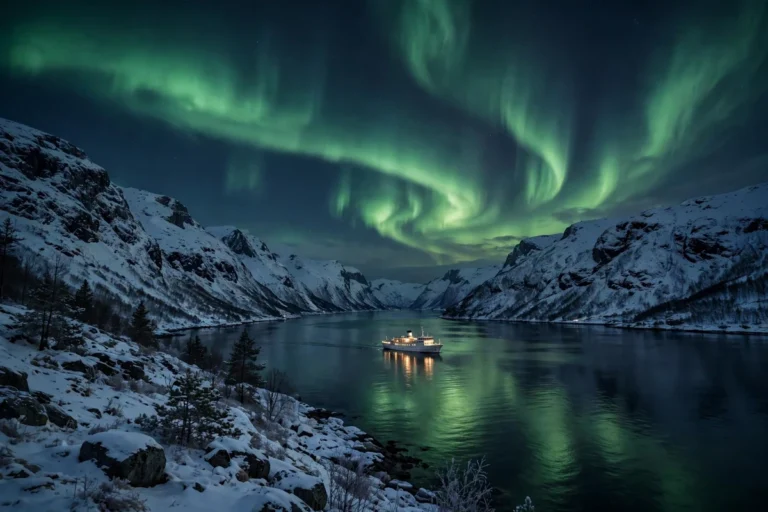
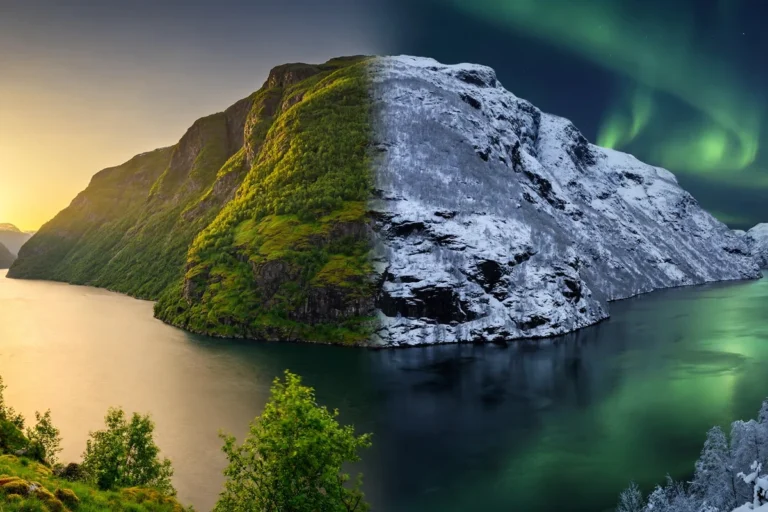
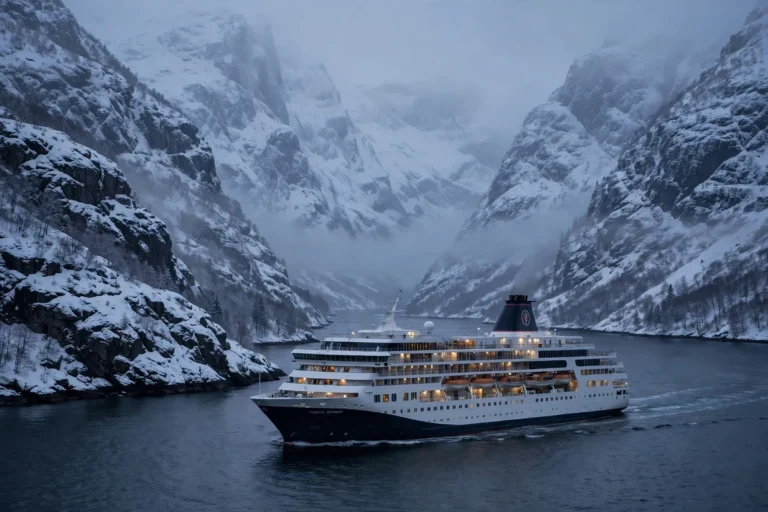
A Norway cruise in winter is not a summer cruise with colder weather. It is a different trip on the same coastline: short blue days, snow on the cliffs, quiet ports, dark skies, and a ship that becomes your hotel, restaurant and viewing platform in one. The big cruise ships mostly leave, the fjord boats thin out, and the travellers who remain are there for the light, or rather for the dark.
That is the trade to understand before you book. Winter gives you the northern lights, the whales, the snow and the silence, and it takes away the long days, the warm decks, the full excursion menu and the green fjords. If you want those, go in summer. If you want the north in winter, this guide covers what actually sails, what the days look like, and what to pack.
For the seasonal comparison, see our summer vs winter guide and our best time to visit guide.
Daylight in winter: the numbers that decide the trip
Winter daylight in Norway depends entirely on latitude, and the difference between Bergen and Tromsø is the difference between a short day and no day at all.
| Place | December daylight | January daylight | What it feels like |
|---|---|---|---|
| Bergen (60.4 degrees north) | About 6 hours | About 7 hours | Short grey days, sunset mid-afternoon |
| Bodø (67.3 degrees north) | About 1 to 2 hours of low light | About 4 to 5 hours | A brief pale glow around midday |
| Tromsø (69.6 degrees north) | No sunrise, polar night | No sunrise until 15 Jan, then a few hours | Blue twilight at midday, then dark |
In Tromsø the sun sets for the last time on 27 November and does not rise again until 15 January. That is the polar night, about seven weeks with no sunrise. Some sources give the span as 28 November to 14 January, a day’s disagreement either side about whether to count the day the sun only grazes the horizon. Either way, call it seven weeks.
The polar night is not 24-hour blackness. For a few hours around midday the sky goes through a long blue and violet twilight, and snow reflects what light there is. It is beautiful, and it is also short: you will not be doing anything outdoors in good light. The sun clears the horizon around 15 January, but the mountains around Tromsø hide it from the city itself until about 21 January, the day the city marks as Soldagen, Sun Day. Daylight then grows fast, from under two hours a day in January to over seven in February.
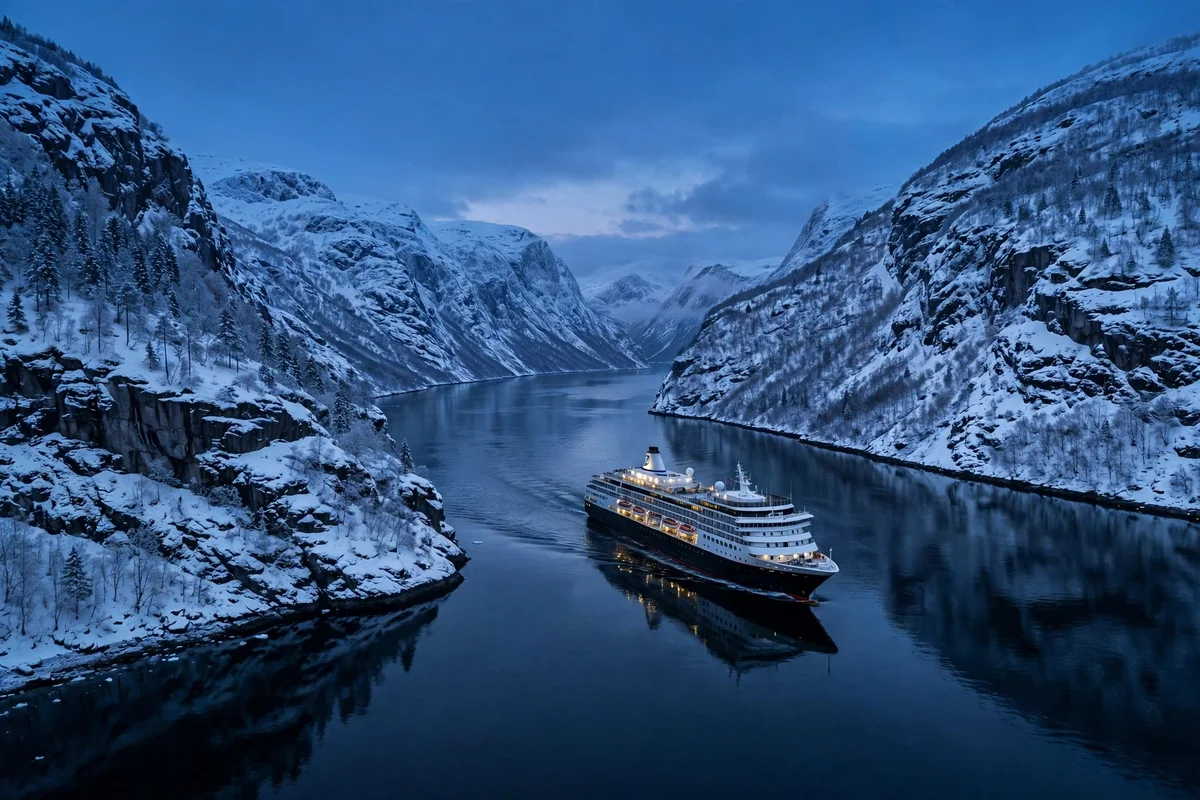
In the western fjords the winter is far gentler. Bergen gets about six hours of daylight in December, and the fjords themselves stay ice-free all winter thanks to the Gulf Stream. That is why a winter trip can combine both: a few days in the fjords, where there is real daylight, and then north to Tromsø for the dark.
Cold is less extreme than most people expect on the coast. In Tromsø the coldest month is February, with a mean of minus 3.2 degrees, an average low of minus 5.7 and an average high of minus 0.7. January averages minus 2.9 degrees and December minus 1.6. Inland and on deck in wind it feels colder, and the damp cold of Bergen can feel worse than the dry cold of the north. The right clothing matters more than the thermometer reading.
The ships that sail in winter
Most large cruise ships leave Norway for the winter. Their place is taken by the ships that work the coast all year, plus a smaller number of dedicated winter sailings.
Hurtigruten and Havila: the coastal voyage, every day
Hurtigruten and Havila sail Bergen to Kirkenes every day of the year, calling at 34 ports, and in winter the route becomes a northern lights voyage. The classic round trip is 12 days, northbound 7 days and southbound 6 days, crossing the Arctic Circle twice and spending the northern half directly under the auroral oval. This is the default winter cruise, and for most people it is the right one: daily departures, a real working ship, local passengers and cargo alongside tourists, and several nights in the aurora zone instead of one.
Both lines offer a Northern Lights Promise, which pays out a free cruise if the lights do not appear on your voyage, with different conditions on each line. The promise is a comfort, not a guarantee of a sighting, and the small print matters: it covers the voyage, not a single night. Our northern lights cruise guide compares the two promises and the ships in detail.
Google Maps: Bergen
Google Maps: Tromsø
Google Maps: Kirkenes
The North Cape Line and expedition ships
Hurtigruten’s North Cape Line is a Signature winter voyage: 15 days and 14 nights from Oslo to Honningsvåg, the port for the North Cape, and back, with a full day in each of 13 ports, sailing September to April. MS Trollfjord sails all-inclusive with an expedition team, and a themed Astronomy Voyage adds a guest astronomer, aurora lectures and a visit to Tromsø’s planetarium. It is the most comfortable way to do the far north in winter, and the most expensive per day.
Expedition ships from HX and others sail winter itineraries to the north as well, with smaller passenger numbers and a focus on landings and lectures. They suit travellers who want a more active winter trip, with snowshoeing and ski touring from the ship.
Large winter ships from the UK
A smaller number of large ships sail from Southampton and other UK ports to Norway in winter, including Christmas and New Year sailings. These are the cruises to look at if you want a festive sailing with shows, restaurants and a full programme on board, and a taste of the fjords in snow rather than a full Arctic voyage. Our Christmas cruise guides cover the December sailings in detail, including the Christmas cruise 2026 guide and the best Christmas cruise guide.
The zero-emission rule in winter
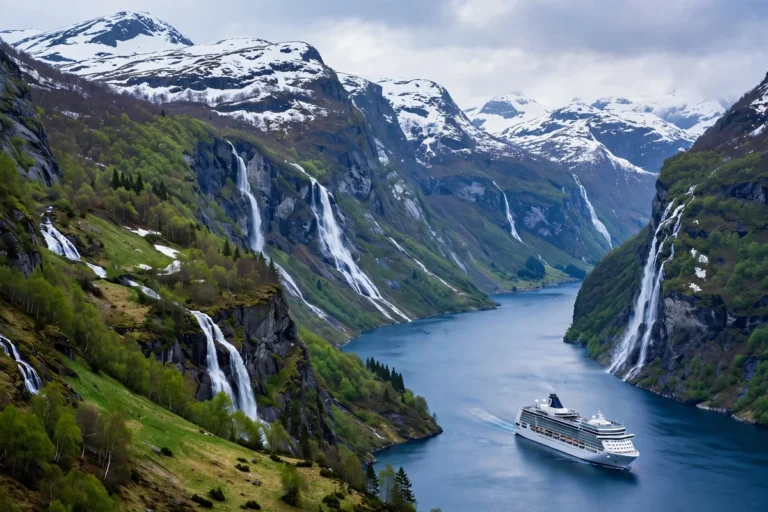
Since 1 January 2026, passenger ships under 10,000 gross tons have been subject to a zero-emission requirement inside the five World Heritage fjords: Nærøyfjord, Aurlandsfjord, Geirangerfjord, Sunnylvsfjord and Tafjord. Ships of 10,000 gross tons and above have until 1 January 2032. In practice this changes little for a winter cruise: the big ships that are affected by the later date keep calling at Geirangerfjord in summer, and in winter the fjord boats that do run are the small electric boats on the Nærøyfjord, which already meet the rule. Our sustainable cruising guide explains the rule in full.
What runs, and what closes
Winter is the season when the timetable matters most. Some fjord services run all year, some stop entirely, and assuming a summer service runs in January is the most common planning mistake.
| Service | Winter pattern |
|---|---|
| Coastal voyage, Bergen to Kirkenes | Year-round, daily departures |
| Flåm to Gudvangen, Nærøyfjord | Year-round, 2 each way daily on the winter timetable |
| Flåm Railway | Year-round, 4 departures a day November to March |
| Lysefjord boat from Stavanger | Year-round, Thursday to Sunday only October to December |
| Mostraumen fjord cruise from Bergen | Year-round, reduced winter timetable |
| Geirangerfjord sightseeing boats | Seasonal, stops in winter; the village stays reachable by road from Ålesund all year |
| Geiranger to Hellesylt car ferry | Suspended since 4 September 2026, check Fjord1 for the 2027 season |
The pattern is clear: the Bergen and Stavanger fjord boats run all year, and the Nærøyfjord from Flåm runs all year, but Geiranger’s boats do not. If you are coming outside May to September, your fjord options are Nærøyfjord from Flåm, Lysefjord from Stavanger and Mostraumen from Bergen, and that is a perfectly good winter trip. Geiranger in winter is a road trip, not a boat trip, and the viewpoint roads above the village are seasonal.
Some hotels, cafes and attractions in the small fjord villages close or cut their hours in winter, and the excursion menu shrinks. Check opening hours before you count on a particular restaurant or museum, and book the excursions that do run in advance: with fewer departures, the popular ones fill up.
Northern lights, whales and winter excursions
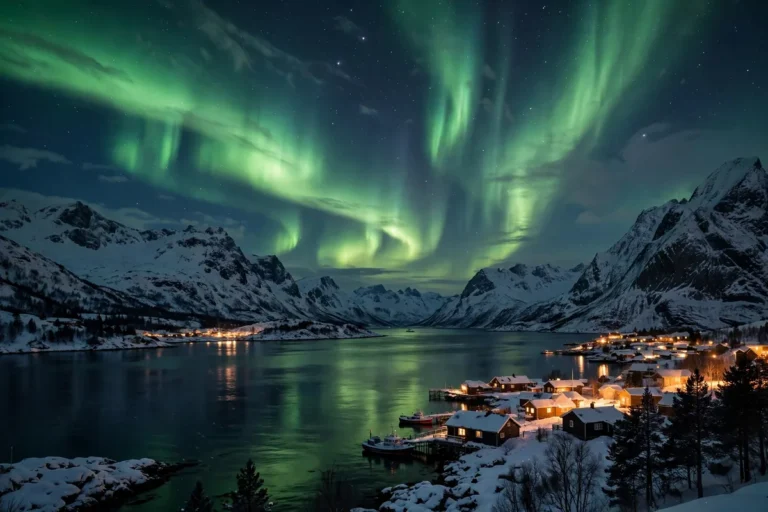
The northern lights are the reason most people book a winter cruise, so it helps to know the odds honestly. The aurora is present over northern Norway all year; what changes is darkness. The season runs from late August to early April, when the sky is dark and clear, and the lights are most often active between about 20:00 and 02:00. The main season runs late September to late March. September and March are often the best months, with higher activity around the equinoxes, while December and January give the longest darkness but also the most cloud. Sightings are never guaranteed, because cloud decides, and a ship cannot turn inland to chase a gap in the cloud the way a land-based tour can.
What a ship gives you instead is many nights under the auroral oval and very little light pollution once it leaves port. Over a 12-day coastal voyage you pass through many local weather systems instead of sitting under one. The lights are usually announced on the ship’s tannoy at night, so keep your clothes laid out and be ready to go on deck quickly.
You can book the Tromsø Small Group Northern Lights Chase on Viator.
Whale watching is the other winter draw. Visit Tromsø gives the season as usually early November to late January, with orcas and humpbacks following the herring into the fjords around Skjervøy and Kvænangen. The boats go out in the short daylight or the blue twilight, and the whales are the main event, not the scenery. Sightings are never guaranteed.
Other winter excursions are built around snow and darkness. Dog sledding, snowshoeing, snowmobiling and cross-country skiing all run from the coastal ports in the north, and the ski and sail guide covers trips that pair a sailing with skiing ashore. In Tromsø the cable car, the Arctic Cathedral and the Polaria aquarium stay open, and the city is at its most festive in December, with Christmas lights and markets. Our Tromsø northern lights guide covers the land-based side in detail.
You can book the Arctic All-in-One Night: Dog Sledding, Snowmobiling & Aurora on Viator.
What to pack for a winter cruise
Winter packing is about layers and wind, not bulk. The ship is warm inside, the deck is cold and windy, and you will move between the two many times a day.
- A windproof and waterproof shell jacket and trousers. Wind on deck is the cold that bites, and rain and sleet are common on the coast even in midwinter.
- A warm mid-layer, fleece or wool, plus thermal base layers. Merino wool works better than cotton, which stays cold when damp.
- Warm waterproof boots with grip. Decks and quays are icy, and town pavements in Tromsø and Bergen freeze overnight.
- Hat, gloves and a neck gaiter or scarf. You lose most heat from your head and hands on a night deck watch, and gloves that let you work a phone camera are worth having.
- An eye mask is not needed in winter, but a headlamp or small torch is useful for dark quays and paths, and for reading the ship’s deck plan at night.
- Seasickness tablets if you are prone. Winter seas on the open stretches, especially around Stad and the Lofoten Islands, are rougher than summer seas, and the coastal ships are smaller than big cruise ships. Our cruise tips for first timers covers seasickness and cabin choice.
Pack a swimsuit too. Many coastal ships have a sauna and some have a hot tub on deck, and a sauna followed by a few minutes watching the sky is one of the best winter evenings on board.
Prices: what winter saves, and what it does not
Winter is the cheapest season for a Norway cruise, with one exception. Big-ship fjord cruises are at their cheapest in winter, because the main season runs May to September and the ships leave. The coastal voyage is cheapest on winter departures too, and Hurtigruten has run discounts of up to 30 percent on selected departures.
The exception is the far north in winter. Tromsø hotels and aurora tours are in high demand from November to March, and prices there reflect it, especially in December and around New Year. The same applies to the North Cape Line in its Christmas sailings. Budget for the north separately from the ship: the cruise may be cheap, and the nights before and after it may not be.
Book the coastal voyage early for the Christmas and New Year departures, which sell out first, and for the February and March sailings, which combine returning daylight with peak aurora season. For a quieter and cheaper trip, late January and early February give you the sun returning, deep snow and the aurora, with fewer people than December.
Who a winter cruise suits
A winter cruise suits aurora hunters, photographers who love low blue light, skiers, dog sledding fans, and anyone who finds a snowy fjord more appealing than a green one. It suits travellers who are happy to plan around a short window of light and spend their evenings looking at the sky. It suits people who like quiet ships and empty viewpoints, and who do not mind that some restaurants and attractions are closed.
It does not suit anyone who wants to hike, kayak or see Geirangerfjord at its greenest, or travellers who struggle with cold or darkness. It does not suit families with small children who need long daylight hours and a full programme of activities, and it does not suit anyone whose main goal is the fjords themselves: the fjords are the reason Norway is famous, and winter shows them at their most severe, not their most welcoming.
If you can only take one Norway cruise, take it in summer. Then, if the north calls you back, take the winter trip second, on the coastal voyage, and give yourself at least three or four nights north of the Arctic Circle. That is the trip this guide is for.
Frequently asked questions
Is it worth taking a Norway cruise in winter?
Yes, if the northern lights, snow and silence are what you want. Winter gives you the aurora season, whale watching, dog sledding and quiet ports, at the lowest cruise prices of the year. No, if you want hiking, kayaking, green fjords and long days: those are summer. Winter is a different trip, not a cheaper version of the summer one.
How cold is a Norway cruise in winter?
On the coast, less cold than most people expect. Tromsø averages minus 3 degrees in January and February, Bergen is usually above freezing, and the fjords stay ice-free thanks to the Gulf Stream. Wind on deck and damp air make it feel colder than the thermometer says, so a windproof shell and layers matter more than a heavy coat. Inland and at altitude it is colder.
Can you see the northern lights from a winter cruise?
Yes, and a coastal voyage is one of the best ways to try. The aurora season runs from late August to early April, most often between 20:00 and 02:00, and a 12-day voyage spends many nights under the auroral oval with very little light pollution. Sightings are never guaranteed, because cloud decides, and September and March are often better than December for clear skies.
Do fjord cruises run in winter?
Some do, some do not. The Nærøyfjord boats from Flåm, the Lysefjord boats from Stavanger and the Mostraumen boats from Bergen run all year, on reduced winter timetables. Geirangerfjord sightseeing boats stop in winter, and the Geiranger to Hellesylt car ferry is suspended. The coastal voyage from Bergen to Kirkenes sails every day of the year and is the main winter cruise.
What is the polar night, and will I see it on a cruise?
The polar night is the period when the sun does not rise at all. In Tromsø it runs from about 27 November to 15 January, roughly seven weeks, with a few hours of blue twilight around midday. A coastal voyage in December or early January sails through it. It is not total darkness, and it is the reason the aurora can appear in the early afternoon.
What should I pack for a Norway cruise in winter?
Layers, windproofs and warm waterproof boots with grip, plus a hat, gloves and a neck gaiter. Pack seasickness tablets if you are prone, because winter seas are rougher than summer seas. Bring a swimsuit for the sauna and hot tub. Leave the eye mask at home: in winter you will want every hour of light you can get.