Norway Cruise Packing List: What to Wear by Season
Packing for a Norway fjord cruise is not like packing for a Mediterranean cruise. The weather changes fast, even in summer. It can be warm in a sheltered fjord at midday and cold on deck an hour later, and Bergen is the rainiest city in Norway. The packing that works is layers, rain gear and good shoes, not summer clothes with a cardigan thrown in.
This guide covers what to wear by season, the layering system that covers almost every situation, and the full checklist, so nothing important stays at home. The first-timer tips guide on this site covers the booking mistakes to avoid.
The weather, by season
The fjord season runs from May to September, and the temperatures tell the story. In Bergen, the daytime high runs from about 14°C in May to 17°C in June and 18°C in July and August, and back to about 14°C in September. The night low runs from about 7°C in May to 12°C in July and August. Geiranger is a little cooler: about 17°C by day in June and 18°C in July, with nights around 9°C to 11°C. In winter, Bergen runs about 5°C by day in January and February, and Geiranger runs about 2°C by day with nights below freezing.
Rain is the constant. Bergen has 12 to 22 rainy days a month, every month of the year, and the fjords are wet in every season. The wettest months are December, with about 22 rainy days in Bergen, and July and August, with 16 to 17. The driest month is April, with about 12. Plan for rain in every month, and you will never be caught out.
Daylight changes more than the temperature. In Bergen, the sun sets around 22:00 in June and around 16:00 in December. In Tromsø, the midnight sun runs from 20 May to 22 July, and the polar night, when the sun does not rise, runs from 28 November to 14 January. The best time to visit the Norway fjords guide covers the seasons month by month, and the Tromsø northern lights guide covers the Arctic dates in full.
What to wear, by season
| Season | Bergen high | Geiranger high | Rain | Daylight | What to wear |
|---|---|---|---|---|---|
| Spring, May | About 14°C | About 14°C | About 14 rainy days | About 17 hours | Waterproof jacket, fleece, warm hat, walking shoes |
| Summer, June to August | 17 to 18°C | 17 to 18°C | 14 to 17 rainy days | 18 to 19 hours | Layers, waterproof jacket, fleece, hat and gloves for deck |
| Autumn, September | About 14°C | About 14°C | About 13 rainy days | About 12 hours | Waterproof jacket, warm layer, waterproof shoes |
| Winter, October to March | 4 to 10°C | 2 to 10°C | 12 to 22 rainy days | 5 to 9 hours | Down jacket, thermal base layer, hat, gloves, scarf, waterproof boots |
| Arctic winter, Tromsø | About -1°C | Not on the fjord route | Snow, not rain | Polar night, 28 Nov to 14 Jan | Full winter kit, thermal layers, insulated boots |
Temperatures are daytime highs from the monthly tables in the appendix. The Arctic winter row covers the coastal voyage and the northern lights trips, not the big-ship fjord sailings, which run from May to September.
The layering system
Layers are the whole strategy. A base layer, a fleece or jumper, and a waterproof windproof outer shell will cover almost every situation on a fjord cruise, because you add and remove layers as the day changes: warm in the lounge, cool on deck, warm again in the fjord, cold again on the top deck at sunset.
The base layer sits next to the skin. Merino wool or a synthetic thermal works best, because it keeps you warm without bulk and dries fast. Cotton is the worst base layer: it holds sweat, gets cold, and stays cold. Pack two or three base layer tops, and wear one under a shirt or jumper on the cool days.
The mid layer is the insulation. A fleece or a lightweight down jacket is the piece you reach for most. A down jacket packs small, weighs little, and is warm enough for the deck in the evening and the early morning sail-ins. A fleece is cheaper and dries faster if it gets wet. Pack one, and wear it over the base layer on deck and in port.
The outer layer is the rain gear. A waterproof jacket with a hood is non-negotiable, in every season, on every fjord cruise. It is the most-used item you will pack. It needs to be waterproof, not just water-resistant, and windproof, because the wind on deck is what makes the cold bite. Waterproof trousers are worth packing if you plan to hike or take a boat trip in the rain, and a waterproof cover for your day bag keeps your camera and phone dry.
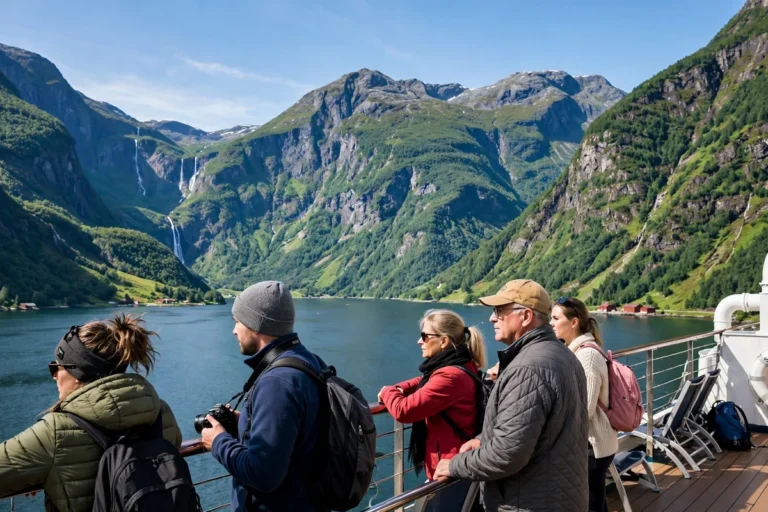
The thing people forget is a proper hat. Scenic cruising through the fjords means standing on an open deck for an hour in wind, and that is where the cold gets you. Pack a warm hat and gloves, even in July, for the early morning sail-ins and the Arctic sailings. A scarf or buff helps on windy deck days, and it weighs nothing.
The essential list
These are the items that matter, in the order you will reach for them.
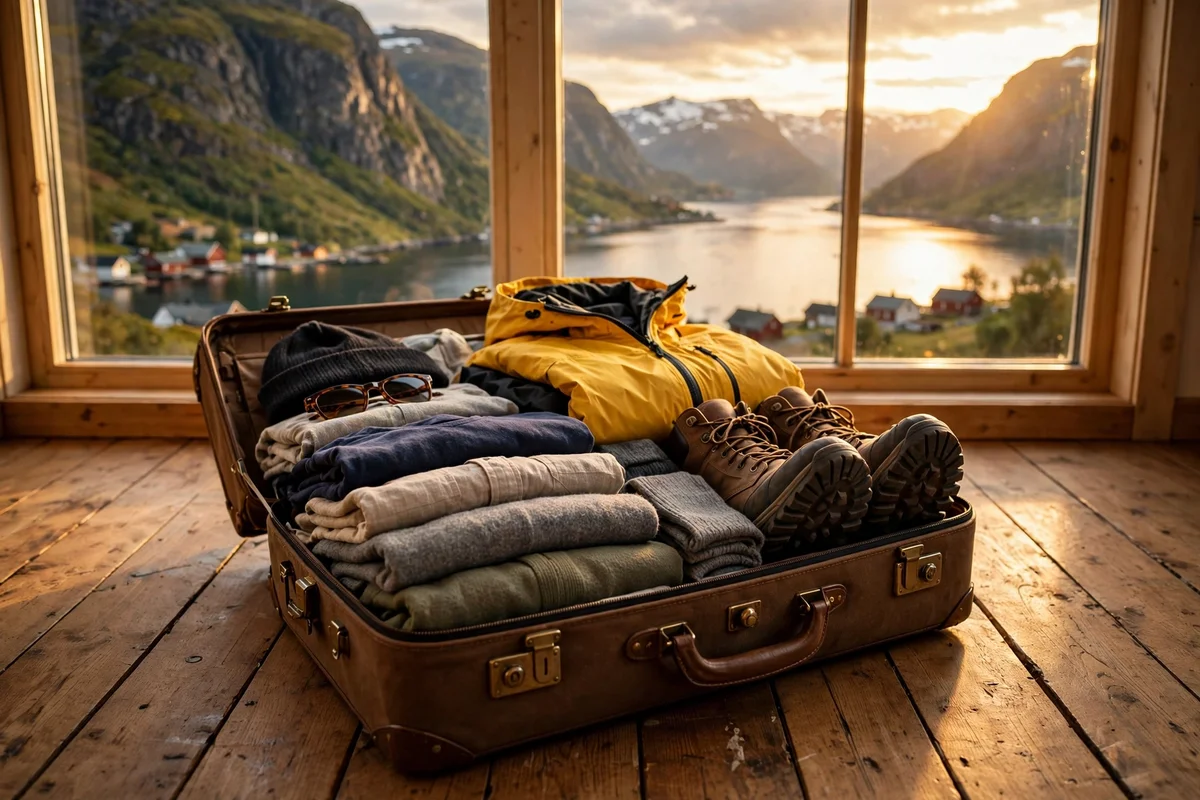
Waterproof jacket with a hood, waterproof and windproof. Fleece or lightweight down jacket. Two or three base layer tops, merino or synthetic. Two or three long-sleeve shirts. Two pairs of trousers, one of them quick-drying. Waterproof walking shoes or boots with grip, for the port days and the hikes. Comfortable shoes for the ship, for the evenings and the sea days. Warm hat, gloves and scarf, even in summer. Sunglasses, because the glare off water and ice is fierce. Swimwear, for the heated outdoor pools and hot tubs, which are at their best in cold weather.
Then the small things: a day bag for excursions, a refillable water bottle, because many Norwegian towns have fresh mountain spring water, binoculars if you are keen on wildlife or scenic views, a power adapter, because Norway uses type C and F plugs, and motion sickness tablets or acupressure bands for the North Sea crossing.
Camera gear needs a note of its own. Cold drains batteries fast, so pack extra batteries and keep them warm in an inside pocket. A waterproof case for your phone is worth it on the fjord boats, where the spray reaches the deck.
Shoes: the one thing not to get wrong
Shoes matter more than anything else in the case, because the port days are walking days. Bergen’s Bryggen and the Fløibanen funicular are a short walk from the quay, and the Bergen guide covers the city in full. Ålesund’s Aksla viewpoint is a climb of 418 steps from the town centre, and the Ålesund guide covers the town in full. The Preikestolen hike from Stavanger is 8 km return over rocky ground, and the Lysefjord and Preikestolen guide covers the hike in full.
Pack waterproof walking shoes or boots with grip, and break them in before you travel. Trainers are fine for the towns, but they are not enough for the hikes or for a wet deck. Pack a second pair of comfortable shoes for the ship, so the walking shoes can dry overnight. Do not pack new shoes for a fjord cruise: the first day in port is not the day to find out they rub.
Evenings and formal nights
Evening dress varies more by cruise line than by destination. P&O and Cunard take evening dress seriously, with black tie or formal nights on most sailings and a smart dress code in the main dining rooms otherwise. MSC and Princess tend to be more relaxed.
A week-long cruise usually has one or two formal nights, and a fortnight has two or three. One suit or dinner jacket, worn more than once, covers it for men. A cocktail dress or a dressy outfit covers it for women. Pack comfortable dress shoes, because the dinners last a while, and low, stable shoes are better than heels on a moving ship.
If formal nights are not your thing, every ship has a buffet and casual options on those evenings, and nobody will mind. Pack smart casual outfits for most nights, and one or two dressy outfits for the formal ones. Do not overpack formal wear: one or two dressy outfits is enough, and the rest should be comfortable, practical and layerable.
The Arctic extras
The Arctic trips need more than the fjord list. Above the Arctic Circle, the temperature drops to 5°C or lower, even in summer, and on glacier days it drops further. The midnight sun sailings in June and July need the same layers as the fjords, plus a warm hat and gloves for the deck at midnight, when the sun is low and the wind is cold.
The winter trips need full winter kit. The northern lights trips run from late September to March, and Tromsø in January runs about -1°C by day, with nights well below freezing. Pack thermal base layers, an insulated down jacket, insulated waterproof boots, a warm hat, gloves and a scarf, and hand warmers for the aurora watching, when you stand outside for an hour or more in the dark. The Tromsø northern lights guide covers the winter trip in full, and the 14-day Arctic Circle itinerary covers the Arctic route day by day.
What not to pack
Do not pack for summer only. The North Sea crossing is cool and windy even in July, and Bergen is the rainiest city in Norway. Do not pack more than one or two formal outfits. Do not pack new shoes. Do not pack a heavy coat for a summer fjord cruise: a down jacket and a waterproof shell weigh less and cover more situations. Do not pack beach clothes beyond swimwear for the pools: there is no beach day on a fjord cruise. And do not pack a full-size umbrella: it is useless in fjord wind, and a hooded jacket does the job better.
Pack light, and leave room in the case. The fjord towns sell wool sweaters and rain gear, and a Norwegian sweater from Bergen or Flåm is a better souvenir than anything from the ship’s shops.
The checklist
The full list, to check off before you close the case:
- Waterproof jacket with hood, waterproof and windproof
- Fleece or lightweight down jacket
- Two or three base layer tops, merino or synthetic
- Two or three long-sleeve shirts
- Two pairs of trousers, one quick-drying
- Waterproof trousers, if you plan to hike or take a boat trip in rain
- Waterproof walking shoes or boots with grip, broken in
- Comfortable shoes for the ship
- Warm hat, gloves and scarf, even in summer
- Sunglasses
- Swimwear
- Day bag for excursions, with a waterproof cover
- Refillable water bottle
- Binoculars, if you are keen on wildlife or views
- Power adapter, type C and F
- Motion sickness tablets or acupressure bands
- Camera, extra batteries, waterproof phone case
- One or two dressy outfits for formal nights, with comfortable dress shoes
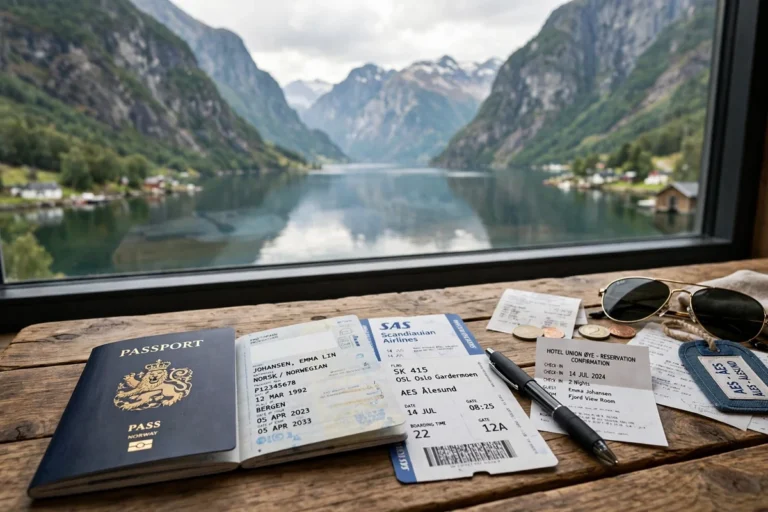
- Passport, and a photo of it on your phone
- Arctic trips only: thermal base layers, insulated boots, hand warmers
Finding your way around
Key map links for the ports in this guide:
- Bergen, Norway, the gateway city of the fjords
- Flåm, Norway, at the head of the Aurlandsfjord, home of the Flåm Railway
- Geiranger, Norway, the UNESCO fjord village
- Stavanger, Norway, the usual first or last port
- Ålesund, Norway, the Art Nouveau town beneath the Sunnmøre Alps
- Tromsø, Norway, the Arctic city, on the 14-night route
Frequently asked questions
What should I wear on a Norway fjord cruise?
Layers. A base layer, a fleece or down jacket, and a waterproof windproof jacket with a hood, plus waterproof walking shoes. That combination covers almost every situation, from a warm fjord afternoon to a cold morning on deck.
Do I need a waterproof jacket for a Norway cruise?
Yes, in every season. Bergen has 12 to 22 rainy days a month, every month of the year, and the fjords are wet in every season. A waterproof jacket with a hood is the most-used item you will pack.
What should I pack for a Norway cruise in July?
The same layers as any other month, minus the heavy winter kit. A waterproof jacket, a fleece or down layer, a warm hat and gloves for the deck, waterproof walking shoes, sunglasses and swimwear for the pools. July is the warmest month, with highs around 18°C in Bergen and Geiranger, but the mornings on deck are still cold.
Are there formal nights on a Norway fjord cruise?
Yes, on most lines. A week-long cruise usually has one or two formal nights, and a fortnight has two or three. P&O and Cunard take evening dress seriously. One suit or dinner jacket, or one cocktail dress, covers it. Every ship has casual options on formal nights too.
What shoes should I pack for a Norway cruise?
Waterproof walking shoes or boots with grip, broken in before you travel, plus a comfortable second pair for the ship. The port days are walking days, and the hikes, Preikestolen and the Aksla steps, need grip. Do not pack new shoes.