Norway Questions Answered: What Is a Fjord, What Do Norwegians Call Norway?
Four questions come up before a first trip to Norway. What is a fjord? What do Norwegians call their own country? Is Norway expensive even for the people who live there? And are the fjords rough?
Each answer below is plain and stands on its own, and each one points to a longer guide on this site when you want more detail.
What is a fjord in Norway?
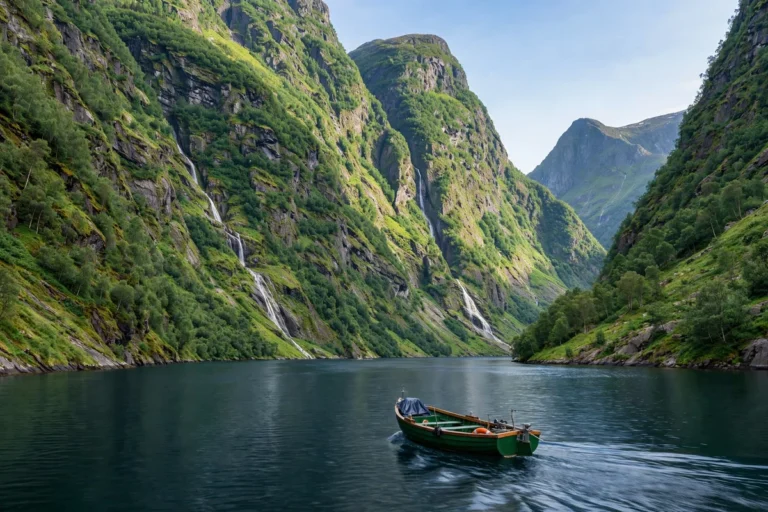
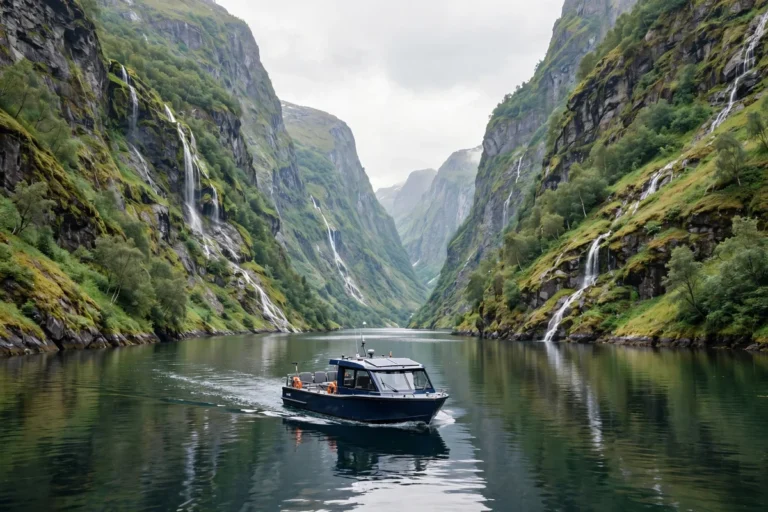
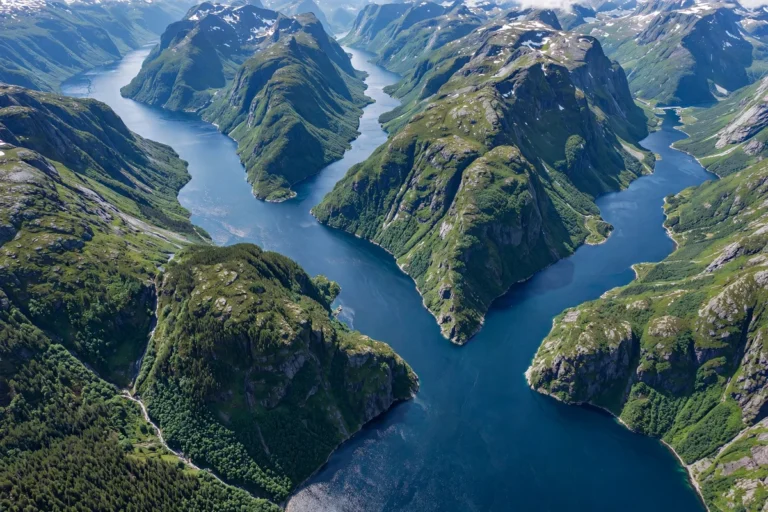
A fjord is a long, narrow inlet of the sea with steep sides or cliffs, in a valley that a glacier carved and the sea then filled. Visit Norway puts it in similar words: a fjord is an inlet of the sea, usually long and narrow and surrounded by high cliffs or steep mountains, with U-shaped valleys that can be very deep and are often shallower at the mouth, where the fjord meets the sea.
The shape is the clue. A river valley is usually V-shaped. A fjord valley is U-shaped, because a glacier ground its way through the rock, widening and deepening the valley as it moved. When the ice retreated, seawater flooded in. The valley below the water stayed deep, which is why a fjord can look like a calm lake from the shore and still be hundreds of metres deep a short distance out. A fjord is salt water, not fresh water, because it connects to the sea at its mouth.
Norway has more than 1,000 fjords. Most visitors see only a small number of them, and that is fine: the famous names are the ones with the easiest access and the most places to stay nearby.
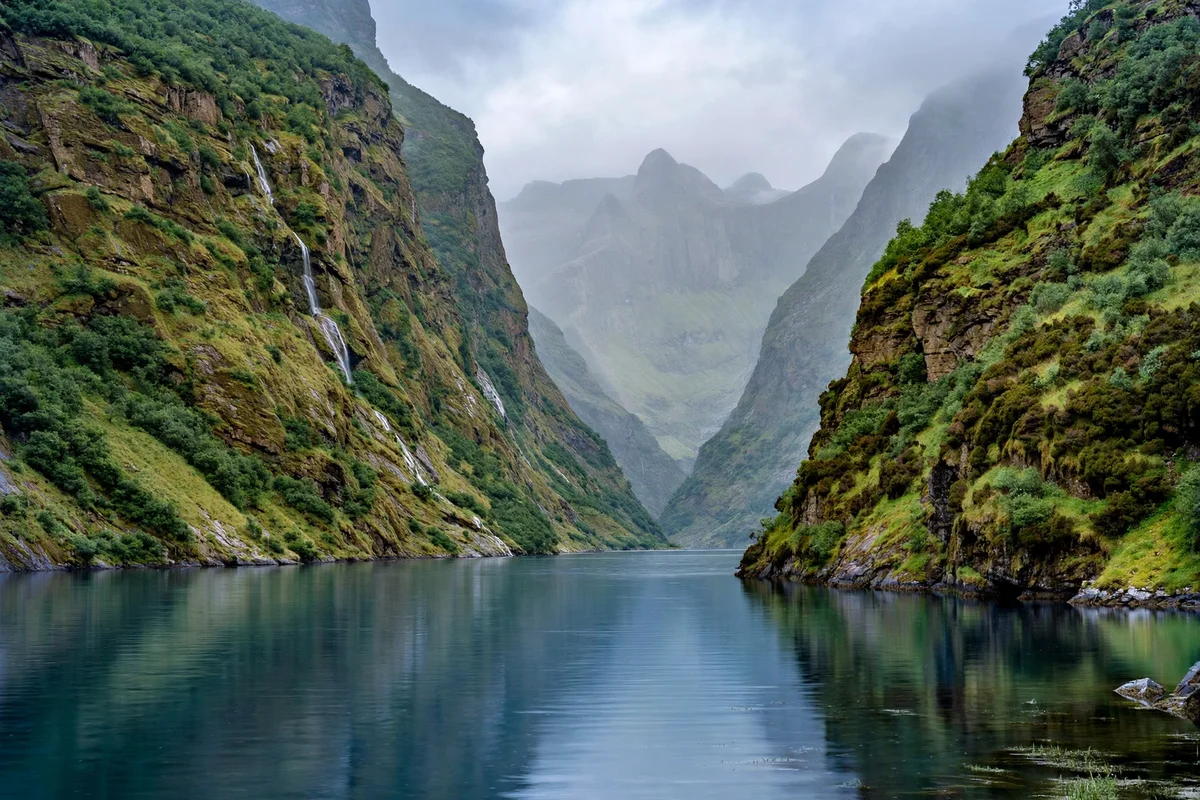
Sognefjord is the scale-setter. It is 205 km long and reaches 1,308 m deep, which makes it the longest and deepest fjord in Norway. It runs inland from the coast to the small village of Skjolden, and it branches into arms that have their own names and characters, including the Aurlandsfjord and the Nærøyfjord. The Nærøyfjord is narrow, steep-sided, and part of the West Norwegian Fjords UNESCO World Heritage Site, along with the Geirangerfjord.
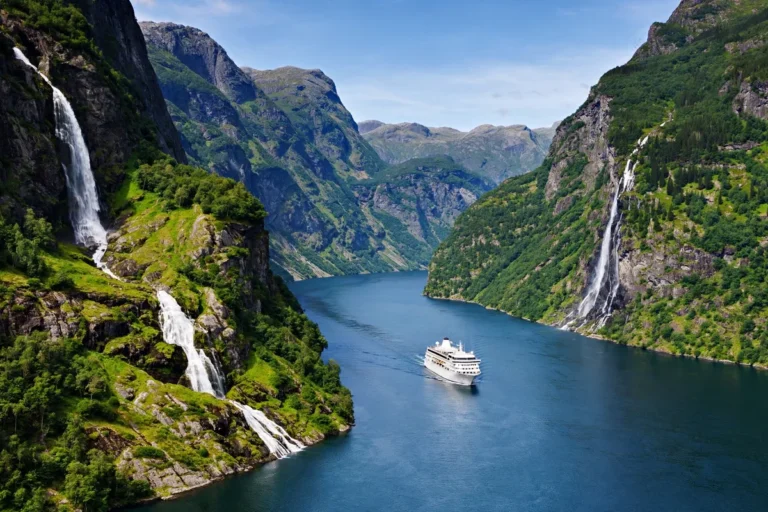
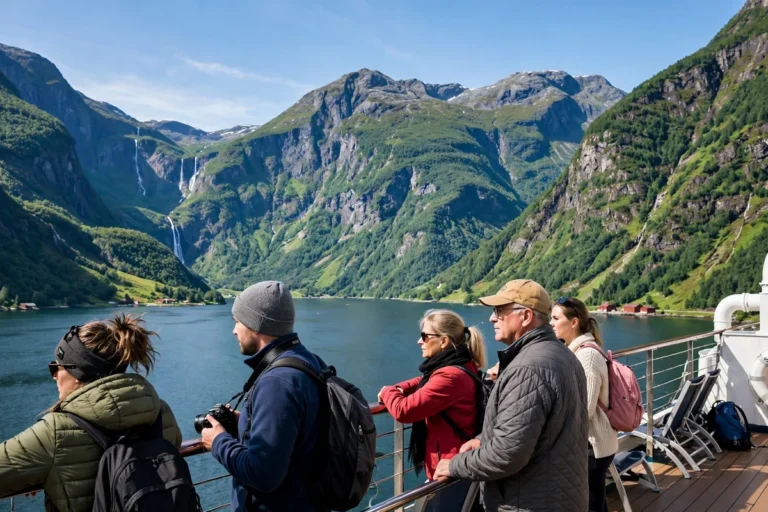
Geirangerfjord is shorter and narrower, and it is the fjord most first-time visitors picture when they hear the word. Its cliffs rise straight from the water, and the village of Geiranger sits at the head of the fjord. Our Geirangerfjord guide covers the viewpoints, the boat options, and the road in and out. Our Sognefjord guide covers the longer fjord and how to travel along it.
You can book the Fjordcruise Ålesund Geirangerfjord Roundtrip on Viator.
One more point matters. In Norwegian, the word fjord is used more widely than the strict glacier-carved definition used in English, for long, narrow bodies of water, inlets, and channels. Oslofjord is the best-known example: it is long and narrow and called a fjord, and it does not look like the steep western fjords.
What do Norwegians call Norway?
Norwegians call their country Norge in Bokmål and Noreg in Nynorsk.
Norway has two official written forms of Norwegian. Bokmål, which means book language, is the more widely used written form. Nynorsk, which means new Norwegian, was built in the 19th century from rural dialects and is used more in western Norway. The UK Permanent Committee on Geographical Names gives the country name in Norwegian as Norge (Bokmål) and Noreg (Nynorsk), and the full state title as Kongeriket Norge in Bokmål and Kongeriket Noreg in Nynorsk.
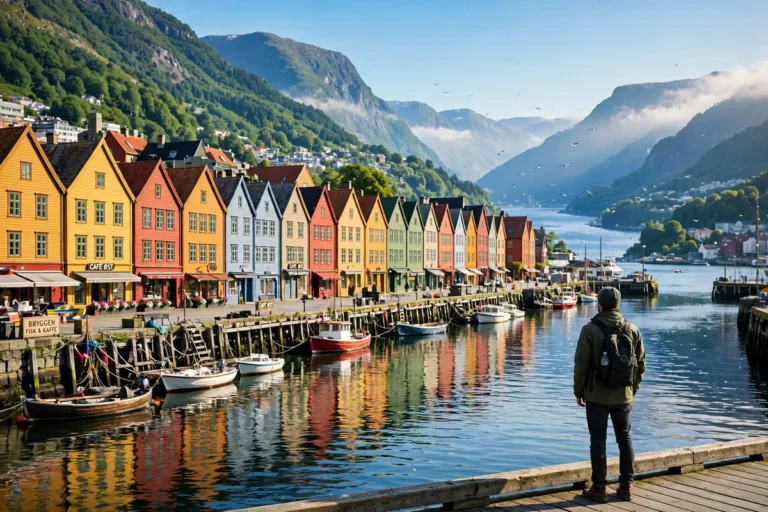
You will see both forms in real life. Road signs and official documents can appear in either form, depending on the municipality. Bergen, Oslo, and most of eastern Norway use Bokmål in most contexts, so Norge is the form most visitors see first. In parts of western Norway, Noreg is normal. Neither spelling is a mistake. The English name Norway comes from the same root: Old Norse Norðrvegr meant the northern way, or the northern path.
Norsk means Norwegian, as in the language or a Norwegian person. If a sign says Velkommen til Norge, it means welcome to Norway. If it says Velkommen til Noreg, it means the same thing, in the other written form. You do not need to learn Norwegian to travel in Norway: English is widely spoken in hotels, on tours, and in the towns most visitors use as bases.
Is Norway expensive for Norwegians?
Yes. Norway is expensive for Norwegians too. Prices are not a tourist surcharge. A resident pays close to the same amount for a restaurant meal, a coffee, a haircut, or a beer as a visitor does.
The reason is wages. Norway has high wages across most sectors, held up by collective bargaining agreements, and those wages have to be paid for in the price of anything that takes a person’s time. A meal in a restaurant, a taxi ride, a hotel room cleaned daily, and a guided tour all carry that labour cost. Goods can be closer to prices elsewhere in Europe, but services are where the difference shows most clearly.
Cost-of-living guides for people who live in Norway make the same point: Norway is one of the most expensive countries in Europe to live in, and at the same time one of the highest-paying. A Norwegian salary buys a Norwegian life, with high prices and a strong welfare system, including subsidised healthcare and free public schooling.
Groceries and eating out are the two costs visitors notice first. A supermarket shop costs more than in most of Europe, and a sit-down meal costs more again. Alcohol is a separate case: wine, stronger beer, and spirits carry high excise duties, and outside weaker beer sold in ordinary grocery stores, alcohol is sold through Vinmonopolet, the state alcohol retail monopoly, or through licensed bars and restaurants. None of this means Norway is out of reach. It means the budget needs to be built the Norwegian way: cook some meals, buy a packed lunch from a grocery store instead of a cafe, and save restaurant meals for the ones that matter. Our Norway fjord cruise cost and budget guide works through the same trade-offs, and our best fjord cruise guide compares the main cruise styles before you commit to a fare.
A cheap-looking fare can still be good value if it includes the expensive parts: a cabin, meals, and transport between fjords. A low daily budget that works in southern Europe will not stretch the same way in Norway.
Are the Norwegian fjords rough?
Usually no. Inside the fjords, the water is generally calm and sheltered. The rough water is on the open sea between the fjords, and on the crossing to Norway in the first place.
The fjords are sheltered by the mountains on both sides. Wind still reaches the water, and a storm can make a fjord choppy, but the fjords do not have the open-sea swell that makes ocean crossings uncomfortable. In summer, the water inside the fjords is often calm enough that a small boat trip feels flat and steady. In winter, storms are more frequent, and conditions can change fast, so the same fjord can be calm in the morning and rough by the afternoon.
The open stretches are different. The North Sea crossing from the UK or Denmark can be rough, and the Norwegian Sea along the coast can be rough too. The stretch most often named is Stad, the peninsula between Bergen and Ålesund where the North Sea meets the Norwegian Sea. Stad is the only peninsula on the mainland coast between Stavanger and Honningsvåg that runs out into open sea without an archipelago to break the waves, and the sea route around it is known for strong currents and shifting weather. Fjord Norway notes that as many as 58 shipwrecks lie on the seabed in the area, and that seafarers in earlier times dragged their boats over the Dragseidet pass to avoid sailing around Stad. A ship tunnel through the peninsula has been planned so that ships can pass in safety, which says enough about how exposed that one stretch is.
That contrast is the whole answer. Fjords: calm and sheltered, most of the time. Open sea: capable of rough weather, especially in winter and at Stad. A cruise that stays inside the fjords will feel very different from a crossing that starts with a night on the North Sea.
Coastal ships are built for the coast they sail. Hurtigruten and Havila coastal ships sail the Bergen to Kirkenes route year-round, and they are designed and crewed for Norwegian coastal conditions. That does not mean the sailing is always smooth. If you are prone to seasickness, the fjord legs are the kindest part of a Norwegian cruise, and the open-sea legs, including Stad and the North Sea crossing, are the parts to prepare for. Take seasickness tablets before you board if you know you need them, pick a cabin or a seat near the middle of the ship and low down, and go outside for fresh air and a view of the horizon if you start to feel ill.
One ferry point belongs here, because it catches visitors out. The Fjord1 car ferry between Hellesylt and Geiranger is suspended since 4 September 2026 until further notice. Do not plan a Geiranger trip around that crossing. The road route via Stryn still reaches Geiranger, and the summer option from Ålesund is a catamaran fjord cruise from Skutvika, not a car ferry. There is no Fjord1 car ferry between Ålesund and Geiranger at all.
How to use these answers when you plan
Start with the fjord, not the cruise line. Pick one fjord area and one base town, then build the days around it. Bergen works for Sognefjord and Hardangerfjord. Ålesund works for Geirangerfjord. Flåm works for the Aurlandsfjord and the Nærøyfjord. Each base gives you a fjord, a railway or a road, and a boat, without a long transfer every day.
Then check the season. Summer gives the calmest water, the longest days, and the most sailings. Winter gives fewer crowds and a higher chance of rough seas on the open stretches. Our best time to visit the fjords guide sets out the trade-offs month by month. Then set the budget with Norwegian prices in mind, not home prices. If you are travelling at Christmas, our Norwegian fjords at Christmas guide, our Norwegian Christmas traditions guide, and our Norwegian fjords Christmas cruise 2026 guide cover the winter season in detail.
Frequently asked questions
What is a fjord in Norway?
A fjord is a long, narrow inlet of the sea with steep sides or cliffs, in a valley carved by a glacier and then filled by the sea. Norway has more than 1,000 fjords. Sognefjord is the longest and deepest in Norway, at 205 km long and 1,308 m deep. The Geirangerfjord and the Nærøyfjord are the two fjords in the West Norwegian Fjords UNESCO World Heritage Site, and they are the narrowest and steepest of the famous fjords.
What do Norwegians call Norway?
Norwegians call their country Norge in Bokmål and Noreg in Nynorsk. Bokmål is the more widely used written form of Norwegian, and Nynorsk is the other official written form, used more in western Norway. The full state title is Kongeriket Norge in Bokmål and Kongeriket Noreg in Nynorsk. The English name Norway comes from Old Norse Norðrvegr, meaning the northern way.
Is Norway expensive for Norwegians?
Yes. Prices for groceries, eating out, and services are high by European standards, and the same prices apply to residents. High wages and a strong welfare system balance the high cost of living for people who live and work in Norway, but they do not make everyday prices low.
Are the Norwegian fjords rough?
Inside the fjords, the water is generally calm and sheltered by the mountains on both sides. Rough water is more likely on the open sea, on the North Sea crossing to Norway, and at Stad, the exposed peninsula between Bergen and Ålesund where the North Sea meets the Norwegian Sea. Storms can still make a fjord choppy, and winter brings rougher conditions than summer, but a fjord cruise is one of the calmest ways to travel by sea in Norway.
Can you get seasick on a fjord cruise?
Yes, but it is less likely inside a fjord than on open sea. The fjords do not have ocean swell, and the water is sheltered. Seasickness is more likely on the North Sea crossing and on the open coastal stretches, including Stad. Take tablets before boarding, choose a cabin or seat near the middle of the ship and low down, and go outside for fresh air if you start to feel ill.
Is there a car ferry from Ålesund or Hellesylt to Geiranger?
There is no Fjord1 car ferry between Ålesund and Geiranger. The summer option from Ålesund is a catamaran fjord cruise from Skutvika, which takes about three hours each way and gives you time ashore in Geiranger. The Fjord1 car ferry between Hellesylt and Geiranger is suspended since 4 September 2026 until further notice, so do not plan around that crossing. Reach Geiranger by road via Stryn, or by the Ålesund catamaran cruise in season.