Haugesund, Kristiansand, Molde & Trondheim: Four Smaller Cruise Ports
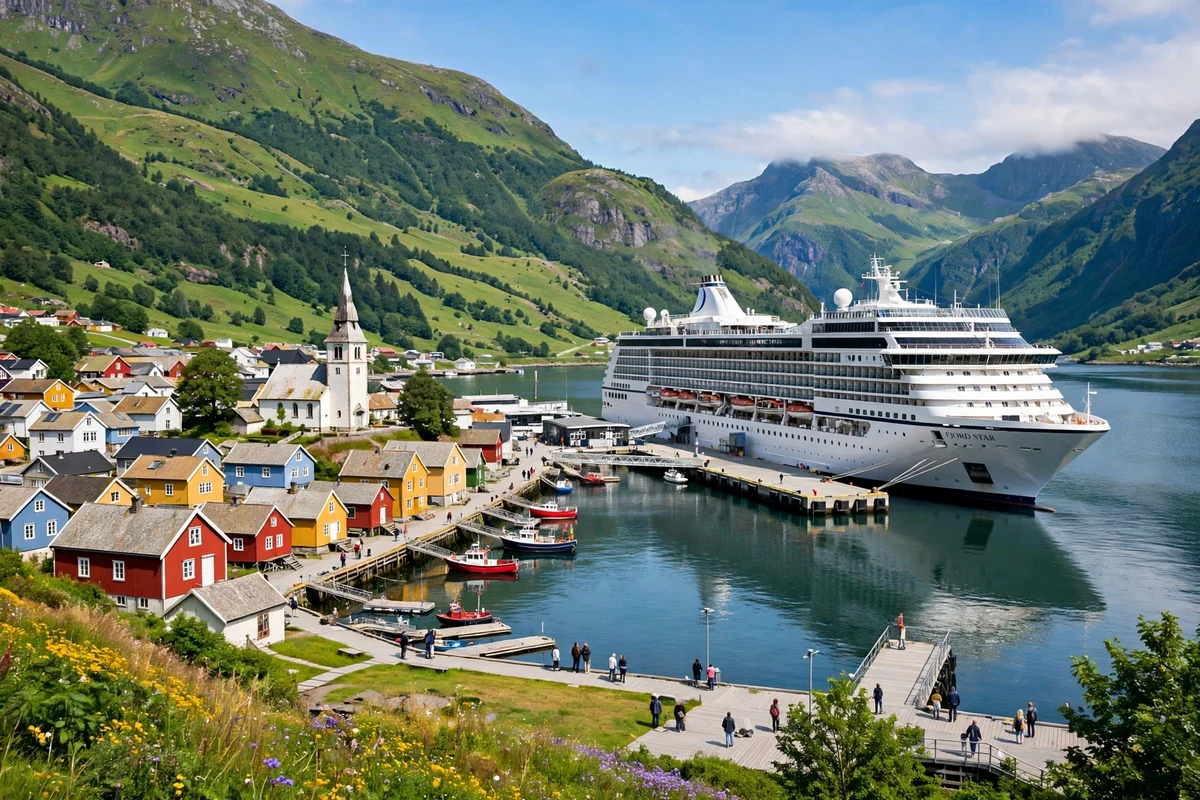
The big fjord ports get most of the attention. Bergen, Geirangerfjord and Ålesund are the names on almost every itinerary, and they earn it. But a Norway cruise also stops at smaller ports, and those stops often turn out to be the easiest days of the trip. The ship docks close to town, the centre is walkable, and a short excursion reaches a Viking farm, a white wooden old town, a mountain panorama, or a medieval cathedral.
This guide covers four of those smaller ports: Haugesund, Kristiansand, Molde and Trondheim. Haugesund is the Viking history stop. Kristiansand is the gentle southern town. Molde is the viewpoint and the Atlantic Road. Trondheim is the historic city with the cathedral. What they share is a straightforward arrival: the ship berths alongside, tendering is rare, and the town is a walk away. None of these four is a fjord in the Geiranger sense, so plan them as town days with one longer excursion, rather than as fjord days.
Haugesund: the Viking port
Haugesund sits on the south-west coast, about 60 km north of Stavanger and about 120 km south of Bergen, on the Karmsund strait. The town itself is young, founded in the 1850s and built on herring fishing, but the land around it is old Viking Age power country.
Most ships dock at Garpaskjærkaien, also written Garpeskjær quay, on the small island of Risøy, across the Smedasundet strait from the town centre. The centre is about 950 m away, a walk of about 15 to 20 minutes. The route follows the waterfront and crosses the Risøy bridge, Risøybrua, over the Smedasundet. The bridge has a noticeable incline, so anyone with limited mobility should take the shuttle bus or a taxi instead. A shuttle, when one runs, usually stops at Vår Frelsers Church in the centre. Tendering is very rare here. Once across the bridge you are on Haraldsgata, the main pedestrian shopping street, and the Smedasundet waterfront is the heart of the town.
Haraldshaugen, the national monument north of the centre, was raised in 1872 to mark a thousand years since the Battle of Hafrsfjord in 872, traditionally regarded as the moment western Norway was unified under one king. According to the Norse sagas, Harald Fairhair, the first king of a unified Norway, is buried here. It is about 2.3 miles by road from the pier, about 5 to 10 minutes by car. Avaldsnes, about 8 km south of Haugesund on Karmøy, is the stronger stop. This is where Harald Fairhair had his home. St. Olav’s Church, built of stone in the 13th century, stands on the site, beside the Nordvegen History Centre and a reconstructed Viking farm. A visit takes about 4 hours as a shore excursion including the drive. Our Viking sites guide covers Avaldsnes in the wider context of Viking Norway.
The longer excursion goes inland to Åkrafjorden and the Langfoss waterfall. Langfoss drops about 600 to 612 m down the steep side of Åkrafjorden, and it was ranked by CNN in 2011 among the ten most beautiful waterfalls in the world. The drive takes about 1.5 hours each way, and the stop at the falls is about 30 to 45 minutes. Most tours run about 5 to 6 hours in total and include a stop at Haraldshaugen and a pause at Åkrafjordtunet, a restaurant stop with fjord views. Some longer versions, about 7 hours, add a boat trip up Åkrafjorden to the foot of the falls. If your call is short, stay in Haugesund and Avaldsnes instead, and save Langfoss for a call of 6 hours or more.
Kristiansand: the southern town
Kristiansand is the largest city in southern Norway, on the Skagerrak coast between Oslo and Stavanger. There are no steep fjord walls here and no mountain panorama. Instead there is a flat, sunny, walkable grid town with white wooden houses, a harbour full of small boats, and a beach a short walk from the ship.
Most ships dock at Cruise Terminal 10, Kai 10, at Lagmannsholmen, beside the Kilden Performing Arts Centre on the harbour. A second pier, Silokaia, is used when two large ships are in port at the same time. The city centre, known as Kvadraturen, is about 500 m from the main quay, a flat walk of about 5 to 10 minutes past Fiskebrygga, the fish market and waterfront restaurant area. Nothing central is more than about 20 minutes from the ship. Kristiansand was founded in 1641 by King Christian IV of Denmark and Norway, as a planned town west of the mouth of the Otra river. The Kvadraturen grid, seven streets one way and ten the other, is still the street plan today.
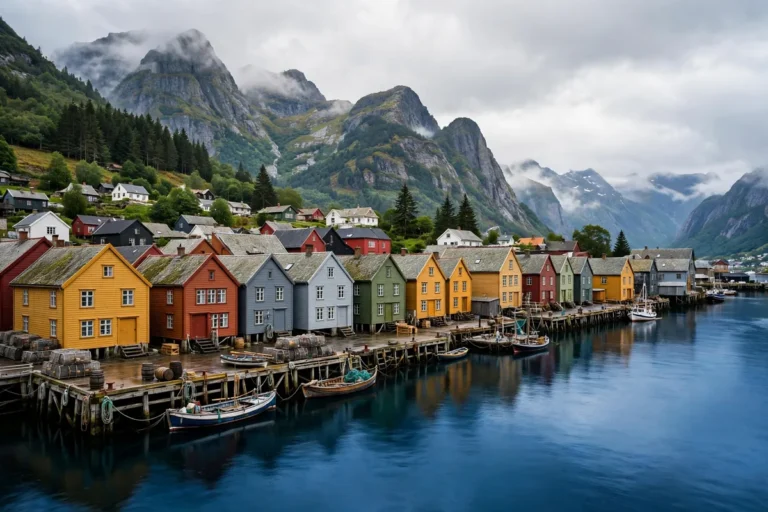
Posebyen, the old town, is the part to walk slowly. It sits in the north-east of Kvadraturen, along the western shore of the Otra, and it is the largest continuous collection of old wooden houses in any city in Northern Europe, with many houses surviving the big city fire of 1892. The district is about 15 to 20 minutes on foot from the pier. It is a residential area, so walk it quietly and do not expect a museum. Christiansholm Fortress, a circular coastal fort from 1672, guards the eastern harbour entrance and is about 10 to 15 minutes along the harbour promenade. Odderøya, the former military peninsula just to the right as you walk off the pier, is now a recreational park. Bystranda, the city beach, is about 10 to 15 minutes from the main piers.
The excursions from Kristiansand are gentler than the fjord excursions further north. The Setesdalsbanen heritage railway runs a narrow-gauge vintage train about 8 km from Grovane to Røyknes, with Grovane about 21 km from the city centre. Lillesand, a white wooden coastal town about 30 km east, is about 30 minutes by car and works as a half-day trip. Lindesnes Lighthouse, at the southernmost point of mainland Norway, is about 85 km away, about a 75-minute drive, and it is a full excursion. Families often head to Kristiansand Dyrepark, the zoo and amusement park east of the centre, about 15 to 20 minutes by car. One point needs care. Kjerag, the famous boulder wedged between cliffs, is sometimes listed as a Kristiansand excursion. It is not a practical one. Kjerag is in Lysefjord, near Stavanger, and it needs a full day with a serious hike. Plan it from a Stavanger call instead, using our Lysefjord and Preikestolen guide.
Molde: roses, a panorama and the Atlantic Road
Molde sits on the northern shore of the Romsdalsfjord in Møre og Romsdal, between Ålesund and Kristiansund. It is known as the Town of Roses, Rosenes by, a nickname from its time as an international tourist town in the late 19th century. The roses still fill the parks and private gardens in summer, from about mid-June to August.
Most ships dock at Storkaia, directly in the town centre. The town square is about 300 m away, the cathedral about 500 m, and the Romsdal Museum about 900 m. Some sources put the walk from Storkaia to the centre at about 100 m. A smaller number of calls use the Moldegård quay, about 1.2 km from the centre, about 15 minutes on foot. Both are alongside berths, so tendering is very rare. Molde town has about 22,410 residents as of 2024. The centre is compact, with Storgata as the main shopping street and the modern Molde Cathedral, consecrated in 1957, a short walk from the pier.
The view above the town is the reason to climb. Varden, at 407 m above sea level, looks out over Molde, the fjord and its islands, and the long line of mountains across the water known as the Molde panorama. Tourism material widely says the panorama takes in 222 named peaks, but at least one recent port guide questions it and asks if the count should be 87, so treat 222 as the traditional claim rather than a counted fact. Varden is about 4.5 to 6 km from the pier by road, about 10 minutes by car or taxi, and about an hour on foot uphill. The Romsdal Museum, about 900 m from the pier, is one of Norway’s largest folk museums. Established in 1912, it holds more than 50 old buildings moved here from around the region. It is a good bad-weather option, and the starting point for the walk to Varden.
The excursion most cruise passengers ask about from Molde is the Atlantic Road, Atlanterhavsveien. The road section is about 8.3 km long, part of County Road 64, running from Kårvåg on Averøy to Vevang on the mainland, across islets and skerries on eight bridges. The best known is the Storseisundet Bridge, about 260 m long. The road opened in 1989, and with the coastal road on to Bud it forms a National Tourist Route about 36 km long. The Atlantic Road is about 50 to 60 km west of Molde, and tours from the pier take about 3.5 hours in total, often combined with Varden. The road is short to drive, so the value is in the stops: Eldhusøya, with its walkway and cafe, the viewpoints, and the open sea on both sides. Bud, at the southern end of the scenic route, is about 40 to 41 km from Molde, about 45 to 50 minutes by road. It has a harbour, a coastal path of about 7 km, and the Ergan Coastal Fort, a Second World War site. There is no published Bud article on this site yet, so this guide does not link to one. Trollstigen, with 11 hairpin bends, is about 85 km away and a full-day trip.
Trondheim: the cathedral city
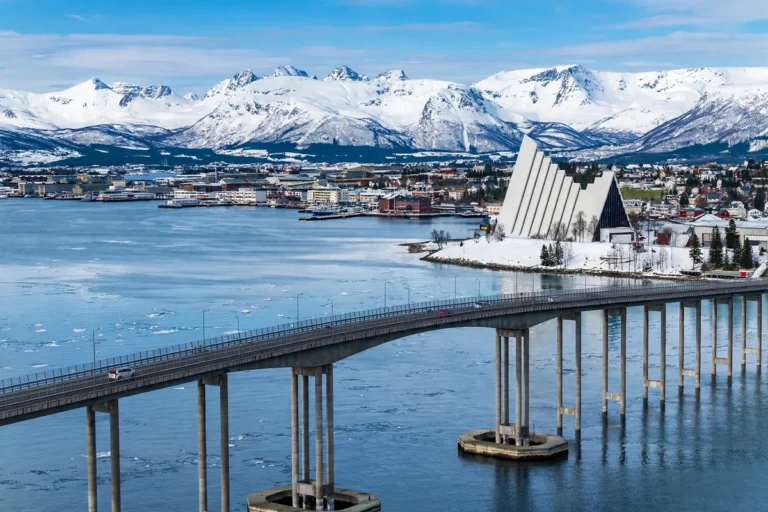
Trondheim is the largest of the four ports in this guide and the most historic. It was founded in 997 by King Olav Tryggvason as Kaupangen, later called Nidaros, and it was the capital of Norway until 1217 and the seat of the archdiocese from 1152 to 1537. It is Norway’s third largest city, with about 215,000 residents in recent guides, and it sits where the Nidelva river loops into the Trondheimsfjord, about 500 km north of Oslo.
Most cruise ships dock at Pir 1 or Pir 2, also called Pier 68 and Turistskipskaia, at Brattøra, on the northern edge of the city centre. The Port of Trondheim gives the designated cruise quay as Quay 68. The central square, Torvet, is about 1.5 km from the pier, a flat walk of about 15 to 20 minutes, and Nidaros Cathedral is about 2 km from the quay, about a 20 to 25 minute walk. The route passes Rockheim, about 200 m from the quay, and Trondheim Central Station, then crosses the Sjøgangen footbridge into the centre. When two ships are in port, the second may use the Skansen quay, about a 30-minute walk back to the centre. Check your ship’s daily programme for the pier before you step off. Tendering is rarely needed, as ships berth alongside.
Nidaros Cathedral, Nidarosdomen, is the reason most passengers walk into town. It is the northernmost medieval cathedral in the world, built over the grave of St. Olav, King Olav Haraldsson, who fell at the Battle of Stiklestad in 1030. Work began in 1070, and the oldest parts of today’s cathedral date from the middle of the 12th century. It is Norway’s national sanctuary and the traditional coronation church of Norwegian monarchs. The west front is free to look at from outside. Entry to the interior, the Archbishop’s Palace and the Crown Regalia exhibition needs a ticket, and booking an entry time in advance is recommended in summer. Allow 45 to 75 minutes for the cathedral and the palace museum together.
From the cathedral, cross the Gamle Bybro, the Old Town Bridge, into Bakklandet. A bridge has stood at this crossing since 1681, after the fire of that year, and the present bridge and its red gates date from 1861. Bakklandet is the old suburb on the east bank of the Nidelva, built up in the 17th and 18th centuries as a district of craftsmen and small traders. Its narrow streets are lined with low wooden houses, and the old timber warehouses stand on stilts over the river. It is about a 10-minute walk from Torvet. Back in the centre, Torvet is the main square, with the statue of Olav Tryggvason on a column that also works as a sundial, and Stiftsgården on Munkegata, a late-baroque wooden palace built from 1774 to 1778 with 140 rooms, now an official residence of the Norwegian royal family in Trondheim. Kristiansten Fortress, on the hill above Bakklandet, was built from 1682 to 1684. The climb from the cathedral area takes about 15 to 20 minutes, and the view over the city and the fjord is the best in Trondheim.
The four ports at a glance
| Port | Where ships dock | Walk to town | Best for | Allow |
|---|---|---|---|---|
| Haugesund | Garpaskjærkaien, Risøy | About 950 m, 15 to 20 min, bridge incline | Viking history, Langfoss waterfall | 3 to 4 hours in town, 5 to 6 hours for Langfoss |
| Kristiansand | Kai 10, Lagmannsholmen | About 500 m, 5 to 10 min, flat | Posebyen, harbour, beach | 3 to 4 hours in town, full day for Lindesnes |
| Molde | Storkaia, town centre | About 100 to 300 m, a few minutes | Varden panorama, Atlantic Road | 3 to 4 hours in town, about 3.5 hours for the Atlantic Road |
| Trondheim | Pier 68, Brattøra | About 1.5 km, 15 to 20 min, flat | Nidaros Cathedral, Bakklandet | 3 to 4 hours in the city, 4 to 5 hours with the fortress |
Planning a cruise day at a smaller port
Smaller ports are easier than fjord ports, but they still need a plan. With about 4 hours, stay in town at all four ports. With 5 to 6 hours, add one thing: Avaldsnes from Haugesund, Varden from Molde, the fortress from Trondheim, or Odderøya and the beach from Kristiansand. With a full day, take one longer excursion, and only one: Langfoss, the Atlantic Road, Lindesnes or Lillesand, or Sverresborg. Two long excursions in one call is how a port day goes wrong.
For Varden, the Atlantic Road, Langfoss and Lindesnes, take a tour timed for your ship rather than a public bus. Our best shore excursions guide covers how to judge a ship tour against an independent one. Build in 30 to 45 minutes before all aboard, more if your excursion involves a long drive. Check the weather on the morning of the call, and check the ship’s daily programme for the pier and the all-aboard time. At Trondheim, confirm if you are at Pier 68 or Skansen. At Kristiansand, confirm if you are at Kai 10 or Silokaia. At Molde, confirm if you are at Storkaia or Moldegård.
When to go follows the same pattern as the rest of the Norwegian coast. Our best time to visit guide covers the seasons in detail. In short, May to September is the main cruise season, and June and July are the busiest months. Molde’s roses are at their best from mid-June to August, and Kristiansand is at its best in summer. Haugesund and Trondheim work in the shoulder months too, because their main sights are town sights and museums. Pick the aim that fits your port and your hours: the Vikings at Haugesund, the white wooden houses at Kristiansand, the panorama and the Atlantic Road at Molde, or the cathedral at Trondheim.
Frequently asked questions
Where do cruise ships dock in Haugesund?
Most ships dock at Garpaskjærkaien on Risøy, across the Smedasundet strait from the town centre. The centre is about 950 m away, a walk of about 15 to 20 minutes across the Risøy bridge, which has a noticeable incline.
Is Kristiansand an easy port to walk from the ship?
Yes, it is one of the easiest in Norway. Most ships dock at Kai 10 at Lagmannsholmen, about 500 m from the Kvadraturen centre, a flat walk of about 5 to 10 minutes past Fiskebrygga. Posebyen is about 15 to 20 minutes on foot from the pier.
How far is the Atlantic Road from Molde?
The Atlantic Road is about 50 to 60 km west of Molde, and tours from the pier take about 3.5 hours in total, often combined with Varden. The road section is about 8.3 km long, across eight bridges, with the Storseisundet Bridge as the best known.
How far is Nidaros Cathedral from the Trondheim cruise pier?
Nidaros Cathedral is about 2 km from the main cruise quay at Brattøra, about a 20 to 25 minute flat walk through the city centre. Torvet, the central square, is about 1.5 km from the pier. If your ship is at the Skansen quay, allow about 30 minutes to walk to the centre.
Can you do the Langfoss waterfall trip on a short Haugesund call?
Only on a call of 5 to 6 hours or more. The drive from Haugesund to Langfoss in Åkrafjorden takes about 1.5 hours each way, and the stop at the falls is about 30 to 45 minutes. On a shorter call, stay in Haugesund and visit Avaldsnes, about 8 km south of town, instead.
Which of the four ports is best for a short call of about 4 hours?
Kristiansand and Molde are the easiest, because the town is a few minutes from the ship. Haugesund is also easy once you cross the bridge, and Trondheim works too, because the cathedral and Bakklandet are a 15 to 25 minute walk from the pier. With about 4 hours, stay in town and save the longer excursions for a full day.